aspademis colabora

Early attention
in Cadiz

The early years they mark a lifetime

The first six years are the period of greatest brain plasticity: when learning is most effective. If your child has a developmental difficulty—or is at risk of developing one—acting early makes all the difference. At Aspademis, we are an Early Childhood Intervention Center (CAIT) affiliated with the Andalusian Regional Government, and we support each child and their family to maximize their development.

What is early intervention?

Early intervention is the set of interventions aimed at children of 0 to 6 years who present developmental disorders or are at risk of developing them, as well as their families and their environment. Its objective is that they receive, following a biopsychosocial model and from a perspective preventive and healthcare, everything that enhances their capacity for development and well-being.

It's not just about working with the child: we seek their full integration into the family, school and social environment, and the highest degree of personal autonomy.

Keep reading

An Early Childhood Intervention Center (CAIT) is a specialized and interdisciplinary center that serves early childhood with developmental difficulties or at risk of having them. At Aspademis we are a CAIT (Early Intervention Center) contracted with the Junta de Andalucía: this means a coordinated professional team and guaranteed intervention, within the public early intervention network.

And what is a CAIT?

Warning signs in development

Every child develops at their own pace, and these signs are not a diagnosis. However, if you notice several of them consistently, it's a good reason to seek help: in early intervention, early detection is key.

Do you recognize several? There are more signs depending on your age.

He is not reaching the expected motor milestones for his age

He is slower to hold his head up, sit, crawl, or walk than expected for his age. Motor development is one of the first areas where difficulties are detected.

He barely responds to his name or rarely seeks contact

Limited eye contact, minimal response when called, or difficulty sharing attention with an adult are all signs of social and communicative issues that should be assessed.

Language either doesn't appear or progresses very slowly.

They don't babble, point, are slow to say their first words, or don't combine words when expected. Language delay is one of the most frequent reasons for consultation.

It does not imitate or develop symbolic play.

He has difficulty imitating gestures or actions, and pretend play (feeding a doll, talking on the phone) is absent. Play is a key avenue for learning at this age.

Difficulties with coordination and fine motor skills

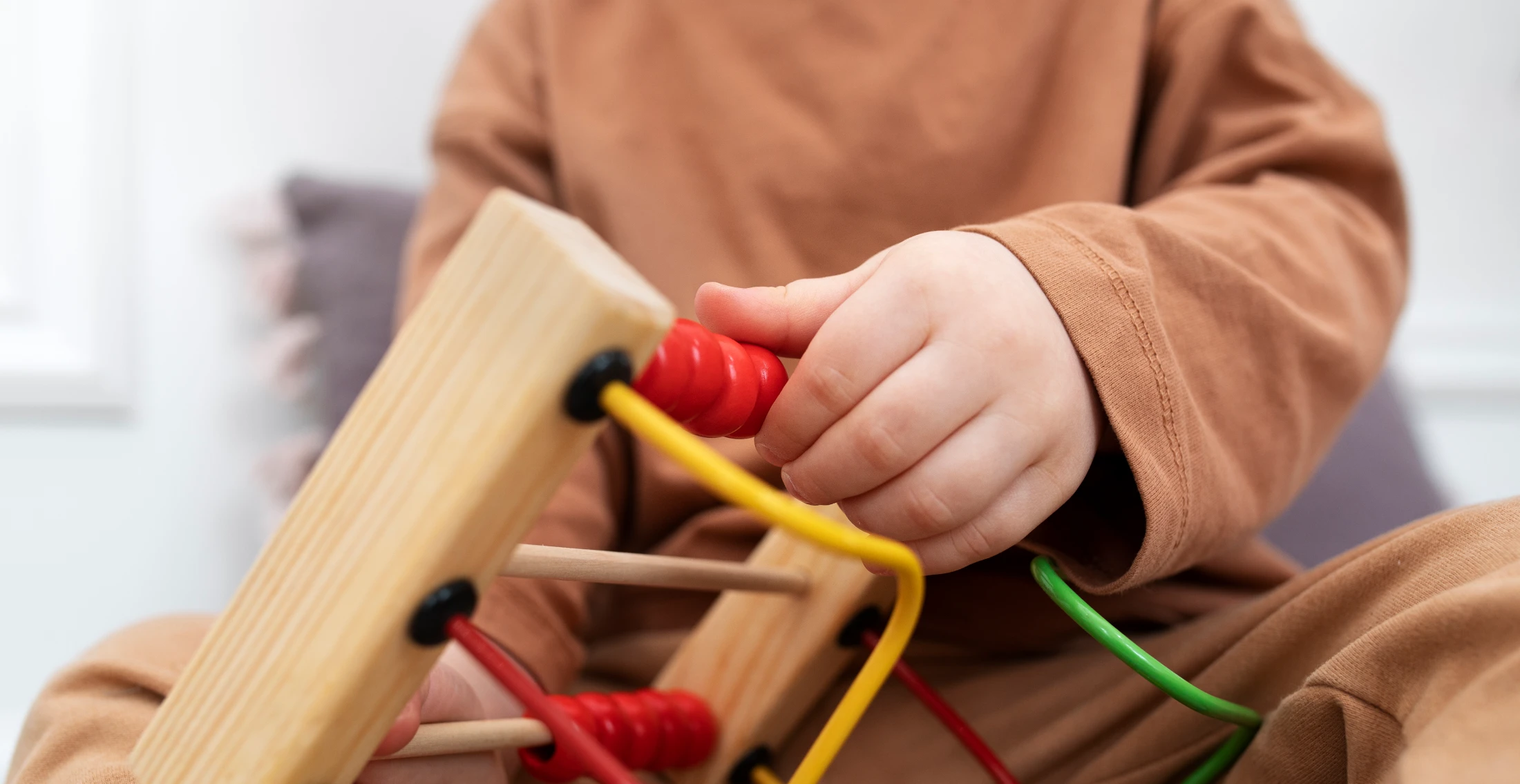
He has difficulty manipulating small objects, fitting them together, building towers, or coordinating his hand and eyes. Eye-hand coordination is fundamental for independence and learning.

Rigidity in response to changes or intense sensory input

Repetitive movements, significant distress with changes in routine, or very intense reactions to noises, textures, or lights. This warrants a professional evaluation to guide the family.

WHAT DO WE DO WHEN YOU BRING US YOUR CHILD?

Nothing starts with putting a label on it. Start by understanding how your child is truly developing—and, if something needs support, work on it with a clear plan. This is the way.

1. Initial assessment

We conduct a developmental assessment that covers all areas: motor, cognitive, language, social, and play. You leave knowing your child's progress and whether they need intervention. (The initial assessment is one of our free services.)

2. Personalized intervention plan

If we detect a difficulty, we clearly explain what is happening and design a plan tailored to the child and the family, with specific goals. A biopsychosocial approach, not an indefinite treatment.

3. Intervention and follow-up

We work with motor stimulation, cognitive stimulation, and speech therapy in sessions that feel more like play than treatment to the child. We progress through goals, support the family, and coordinate with daycare centers and schools.

Slowly but surely, always through play and respecting each child's pace. And importantly: the earlier it's detected, the better the response. That's why it's called early intervention.

Do you recognize several? There are more signs depending on your age.

Who is Gema Rodríguez González?

Psychopedagogue

Master's degree in early intervention. She has been a team member at Aspademis since 1998. Coordinator of the early intervention team, family foster care, cognitive stimulation, and emotional support. Screening, assessment, and intervention in the cognitive field.
Parents' testimonies

These are some of the reviews our children's parents have left us.

aspademis terapias

Start today

Do you have questions about your child's development?

If you're concerned about anything—how your child speaks, moves, interacts with others, or plays—don't wait. In early intervention, every month counts, and a timely assessment can make all the difference. We offer guidance with no obligation.

Contact us

If you need to contact us, you can do so through:

Frequently asked questions from our parents.

At Aspademis we care about you, that's why we've gathered here the most frequently asked questions from our parents about early intervention

What is early intervention?

It is a set of interventions aimed at children aged 0 to 6 years with developmental disorders or at risk of developing them, and their families. It seeks to promote their development and autonomy through a preventative and supportive approach.

An Early Childhood Intervention Center is a specialized, interdisciplinary center that provides services to young children with developmental difficulties. Aspademis is an Early Childhood Intervention Center (CAIT) affiliated with the Regional Government of Andalusia.

For boys and girls from birth to 6 years old. The earlier a difficulty is detected, the better the response to treatment.

If you notice signs such as delayed language or motor development, poor social response, coordination difficulties, or resistance to change, it's advisable to consult a professional. An initial assessment will provide guidance even without a prior diagnosis.

Motor stimulation, cognitive stimulation and speech therapy, in addition to neurodevelopmental work, symbolic play, eye-hand coordination and language and communication.

We are a center affiliated with the Junta de Andalucía and the initial assessment is free.

Yes. The family is an essential part of the process, and we coordinate with nurseries and schools to ensure consistent support across all of the child's environments.